Nine out of ten new players lose their first several rounds not because of bad luck, but because of a handful of predictable, repeatable errors. The mechanics of the chicken road game look deceptively simple: move forward, collect a multiplier, decide when to cash out before the streak ends. Yet that simplicity is exactly what trips people up. The moment risk and reward are compressed into a single button press, judgment gets cloudy fast.
What separates players who last from those who burn through their bankroll in a single session isn't luck at all - it's discipline and pattern recognition. Most beginners chase one more step when they should stop, or stop too early out of fear, missing the multiplier growth that made the round worth playing. Before diving into the mechanics yourself, it helps to review a breakdown of common mistakes in chicken road game sessions, since recognizing these patterns early saves both money and frustration. Once you know what typically goes wrong, the rest of the learning curve gets noticeably shorter.
This guide breaks down the game's mechanics, the errors that quietly drain new players' balances, and the adjustments that turn random guessing into a repeatable, disciplined approach.
Understanding the Basics of Chicken Road Game
Before addressing mistakes, it's worth being precise about what the game actually asks of you. Chicken road game belongs to a family of "crash-style" or "progression" games where a character advances along a path, and each successful step increases a multiplier applied to the player's stake. The player controls exactly one decision at each step: continue or cash out. There's no skill involved in the outcome of any single step - the odds are fixed by the game's underlying probability curve - but there is real skill in how you manage the sequence of decisions across a session.
How the Game Mechanics Work
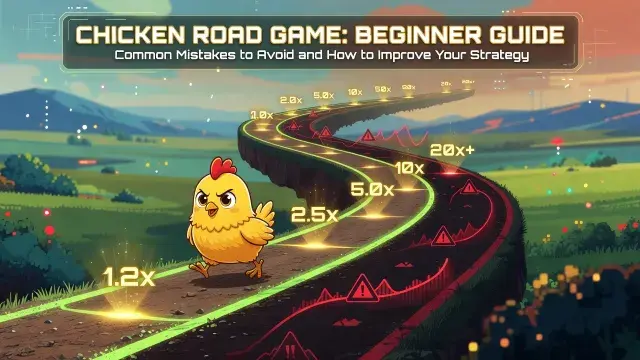
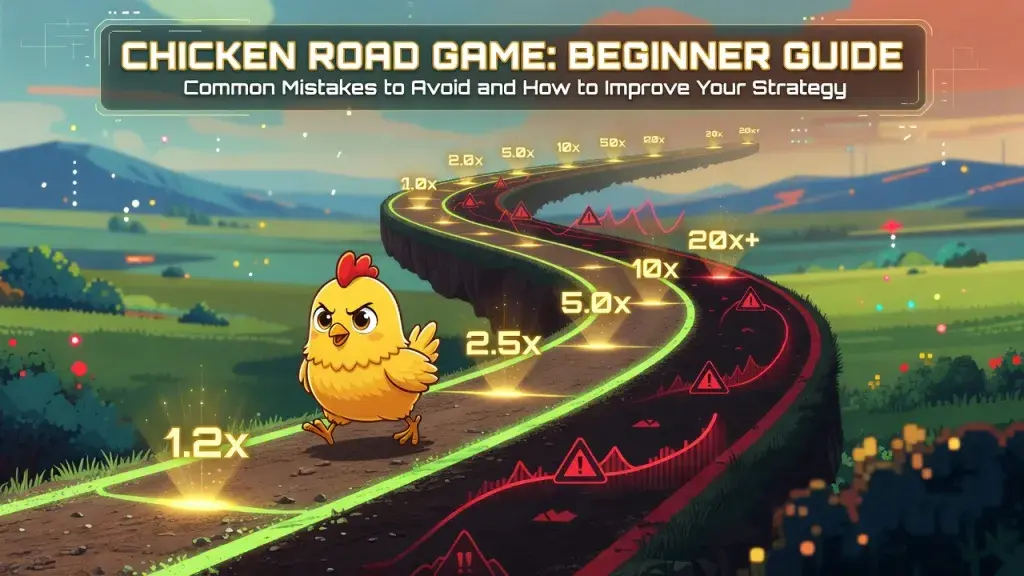
Each round starts with a wager. As the character moves forward, the multiplier climbs, and so does the probability that the round will end unsuccessfully on the next step. This inverse relationship - higher reward, higher risk - is the entire engine of the game. Understanding this curve is the first real step in any chicken road game beginner guide, because everything else builds on it.
Why Beginners Misjudge Risk Early On
New players tend to treat early steps and late steps as equally safe, when they're not. The probability of failure compounds with every additional step taken, even if the visual presentation makes each step look identical. This misjudgment is the root cause of many of the common mistakes covered later in this guide.
Common Mistakes Beginners Make
Most losses in this game trace back to a small set of recurring behaviors. Recognizing them by name makes them far easier to catch in real time, before they cost you a full bankroll.
Chasing Losses After a Bad Round
Increasing your stake immediately after a loss to "win it back" is one of the most damaging habits a player can develop. It replaces calculated decision-making with emotional reaction, and it almost always leads to steeper losses. The game has no memory of previous rounds - each one starts fresh - so there's no logical reason to bet more simply because the last round failed.
Ignoring Bankroll Management
Playing without a predefined budget is a fast track to burnout. Beginners often treat their entire balance as available for a single session, rather than dividing it into smaller units meant to survive multiple rounds and multiple sessions.
Cashing Out Too Late Out of Greed
The flip side of chasing losses is chasing bigger multipliers past the point of reasonable risk. A multiplier that looks attractive at step six can become reckless by step twelve, yet the visual momentum of a winning streak makes it easy to keep pushing.
Misreading Patterns That Don't Exist
Because each round is independent, there's no such thing as a "due" outcome. Beginners frequently convince themselves that a failure is "overdue" after several successful rounds, or that a streak will continue simply because it has gone on for a while. This is a classic gambler's fallacy, and avoiding common errors like this one is central to playing with a clear head.
- Betting larger amounts to recover previous losses
- Playing without a session or loss limit
- Holding out for maximum multipliers instead of consistent smaller wins
- Assuming past rounds influence future outcomes
Chicken Road Game Tips for New Players
Once the common pitfalls are clear, the next step is building habits that actively work in your favor. These chicken road game tips are less about clever tricks and more about consistency.
Set a Cash-Out Target Before You Play
Decide, before the round starts, at what multiplier you'll cash out - and stick to it. Deciding in the heat of the moment almost always favors greed or panic over reason.
Start with Smaller Stakes to Learn the Rhythm
Lower stakes let you observe how the multiplier curve behaves without meaningful financial pressure. This is where most of the practical learning in a chicken road game beginner guide actually happens - through repetition, not theory.
Track Your Sessions
Keeping a simple log of stakes, cash-out points, and outcomes reveals patterns in your own behavior that are otherwise invisible. Many players discover they cash out inconsistently - sometimes far too early, sometimes far too late - only after reviewing their own numbers.
Avoiding Common Errors Through Better Decision-Making
Tips only work if they're paired with a decision-making framework that holds up under pressure. This section focuses on structural changes to how you approach each round.
Separate Emotion from Strategy
The strongest players treat each round as a mechanical decision, not a personal contest against the game. Removing ego from the equation - the desire to "beat" a bad streak - eliminates a large share of avoidable losses.
Use Fixed Stop-Loss and Stop-Win Rules
A stop-loss rule tells you when to walk away after a series of losses; a stop-win rule tells you when to walk away after a series of gains. Both protect you from the two extremes - despair and overconfidence - that drive most bad decisions.
Review Mistakes Without Self-Judgment
Treat a poor cash-out decision as data, not failure. The goal isn't perfection in a single round; it's a better average outcome across many rounds.
Improving Chicken Road Game Strategy Over Time
Strategy isn't static. As you accumulate more sessions, your understanding of the multiplier curve and your own risk tolerance should sharpen together.
Adjust Your Risk Profile Based on Results
If your logs show that late cash-outs consistently cost you gains, shift your target earlier. If early cash-outs are leaving obvious value on the table, extend your threshold slightly. Improving chicken road game strategy is an iterative process, not a one-time fix.
Balance Consistency with Occasional Calculated Risk
A strategy built entirely on caution can be just as limiting as one built on recklessness. Occasionally allowing a slightly higher-risk round - with money you've already decided you can afford to lose - keeps the game engaging without compromising your overall bankroll discipline.
Revisit Your Rules Periodically
Rules that worked when you were new may need adjustment as your comfort with the game grows. Revisiting your stop-loss, stop-win, and cash-out targets every few sessions keeps your strategy aligned with your actual skill level, not your skill level from weeks ago.
Frequently Asked Questions
Is there a guaranteed way to win consistently at chicken road game?
No. The game is built on fixed probability, meaning no strategy eliminates risk entirely. What a solid strategy does is reduce unnecessary losses and make your outcomes more predictable over many rounds, rather than guaranteeing profit in any single one.
How much should a beginner wager per round?
A common approach is risking a small, fixed percentage of your total bankroll per round - small enough that a string of losses doesn't wipe out your ability to keep playing and learning. The exact figure matters less than the discipline of sticking to it consistently.
What's the biggest difference between beginners and experienced players?
Experienced players cash out based on a predetermined plan, while beginners tend to decide in the moment, influenced by recent wins or losses. That single difference in decision timing accounts for most of the performance gap between the two groups.
Should I increase my bet after a win?
Only if it fits within a rule you set in advance, not as a spontaneous reaction to momentum. Increasing bets purely because of a recent win carries the same emotional risk as increasing them after a loss.
How do I know when my strategy needs adjusting?
Track your sessions over time. If your logs consistently show losses concentrated around a specific multiplier range or decision pattern, that's a clear signal to revise your cash-out targets or stake sizing.
Is chicken road game more about luck or skill?
The outcome of each individual step is governed by chance, but the sequence of decisions across a session - when to stop, how much to stake, how to respond to losses - is entirely skill-based. That's where consistent improvement actually comes from.