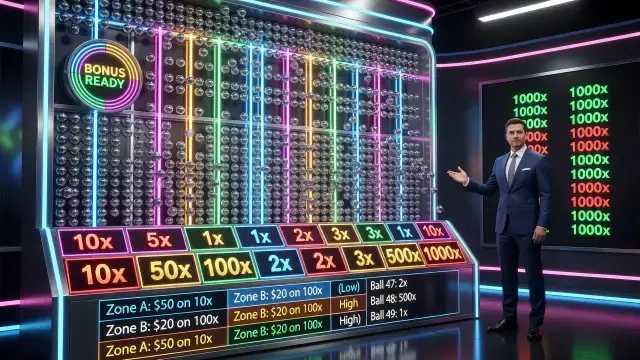
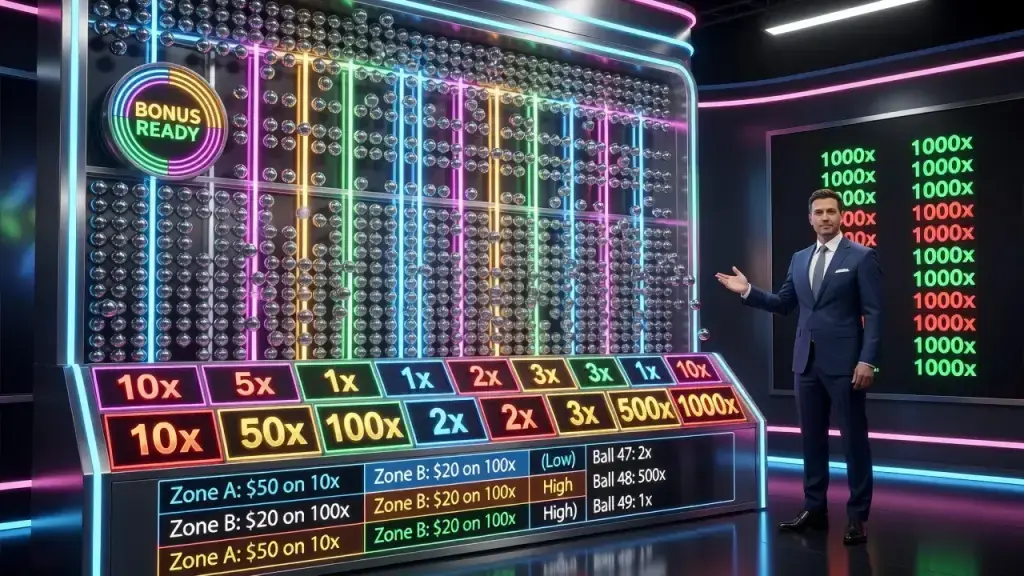
A ball drops through a field of pins, bounces unpredictably, and lands in a slot that determines whether you walk away with a modest win or a multiplier that changes the session entirely. That single mechanic, borrowed from Japanese arcade culture and rebuilt for online casinos, has turned into one of the more talked-about game show formats in recent years. Players keep asking the same question in forums and comment sections: does this game reward skill, or is it pure chance dressed up with flashing lights?
This crazy pachinko review exists to answer that question honestly, without the marketing gloss. We'll break down how the physics of the drop interacts with the betting structure, what the real odds look like across different segments, and how the bonus round actually pays out compared to the base game. For readers who want to see the mechanics in motion before committing real money, the game is available to test on site, where the pacing and volatility become much clearer after a few dozen rounds. Everything here is grounded in how the game is actually built, not in speculation about hidden algorithms or lucky charms.
By the end, you'll understand not just how the game works, but how to approach it with realistic expectations. There's a meaningful difference between playing for entertainment and playing with a structured bankroll plan, and both approaches deserve honest treatment.
What Is Crazy Pachinko and How Does It Work?
Crazy Pachinko takes the traditional Japanese arcade concept - balls falling through a pin-studded board into numbered pockets - and converts it into a live game show format with a presenter, a giant vertical board, and a betting interface layered on top. Instead of manually launching balls yourself, you place bets on where they'll land, then watch as the physical board does the rest.
Core Mechanics Explained
The board is divided into multiplier slots along the bottom edge, ranging from low modest multipliers near the center-adjacent zones to substantially higher ones at the far edges. Balls are released from the top and interact with a grid of pins, creating a bounce pattern that's genuinely unpredictable in real time, even though the underlying probability distribution is fixed by design. This is a physical randomization process, not a purely digital random number generator dressed up with animation.
The Role of the Bonus Drop
Periodically, a bonus symbol appears on the board itself, and if a ball lands on it, the round shifts into a separate bonus mechanic - often involving a different, smaller board with amplified multipliers. This is where the largest payouts tend to concentrate, and it's a structural feature worth understanding before you start adjusting your bet sizes around it.
Why the Format Appeals to Casual and Serious Players Alike
Part of the appeal is transparency. You can watch the ball bounce, see exactly which slot it lands in, and there's no ambiguity about the outcome. That visual clarity is a large part of why this format has grown a dedicated following among players who are skeptical of purely digital slot mechanics.
Crazy Pachinko Review: First Impressions and Gameplay Experience
Judged purely on presentation, the game succeeds at what it sets out to do: create tension through a physical process rather than a spinning reel or a card flip. The board itself is oversized and well-lit, and the presenter's role is mostly to manage pacing and announce results, not to influence outcomes.
Pacing and Round Duration
Each round moves at a reasonable clip. Ball drops happen every fifteen to twenty seconds during standard play, though this stretches out considerably during bonus rounds, since the secondary board mechanic takes longer to resolve. Players who prefer fast, high-frequency betting may find the pacing occasionally slower than a standard slot title.
User Interface and Betting Flexibility
The betting panel allows for multiple simultaneous wagers across different multiplier zones, which matters more than it initially seems. Spreading bets across several zones changes your exposure profile considerably compared to concentrating everything on one high-multiplier slot.
- Multiple bet slots active per round
- Adjustable stake sizes independent for each zone
- Live history panel showing recent ball landings
- Visible bonus trigger frequency indicator
Overall Verdict on Presentation
The production quality holds up well against comparable game show titles. Where it distinguishes itself is in the sense of physical fairness - there's no black box calculating your fate, just gravity and geometry.
Understanding Crazy Pachinko Odds
This is where players tend to misjudge the game. The crazy pachinko odds are not evenly distributed across the board, and that's by design, not an accident of the physical layout. Slots near the center of the board are statistically more likely to receive balls, simply because that's where the bulk of the pin interactions funnel the trajectory. Center slots carry lower multipliers precisely because they hit more often.
Center vs. Edge Probability
Edge slots, which carry the highest multipliers, are hit far less frequently. This isn't a flaw - it's the same principle behind a Galton board, a classic probability demonstration where results cluster in a bell curve. Betting exclusively on edge slots means accepting long stretches without a hit in exchange for occasional large payouts.
How the Math Balances Out
The game's return-to-player figure is baked into that distribution curve. Low multiplier zones pay out often but modestly; high multiplier zones pay rarely but significantly. Neither approach inherently beats the other over a long session - the house edge is embedded in the overall curve, not in any single slot.
What This Means for Bet Placement
Understanding this distribution is the single most useful thing a new player can do before wagering seriously. It reframes the entire game from "random luck" to "probability management," which is a meaningfully different mindset.
Crazy Pachinko Strategy: Practical Approaches
There is no strategy that overrides the fixed probability curve, but there are approaches that manage risk and bankroll more intelligently than blind betting.
The Spread Betting Approach
Placing smaller bets across multiple slots - including a few center zones and a couple of edge zones - smooths out variance. You'll win more often, though for smaller average amounts, and your bankroll will last longer session over session.
The Concentrated High-Multiplier Approach
Some players prefer to bet only on the highest multiplier edge slots, accepting long dry spells in exchange for the possibility of a large single hit. This crazy pachinko strategy suits players with a higher risk tolerance and a bankroll built to withstand extended losing streaks.
Bankroll Management as the Real Strategy
Regardless of which betting pattern you favor, setting a fixed loss limit per session matters more than any slot selection. Pachinko-style games can produce long streaks of near-misses that feel psychologically close to a win but aren't - recognizing that pattern protects your bankroll better than chasing it.
Adjusting Strategy Around the Bonus Trigger
Since the bonus trigger appears semi-randomly across the board rather than tied to specific slots, there's no way to bet specifically "for" the bonus. The smarter approach is simply maintaining consistent bet sizing so that when the bonus does trigger, your exposure is proportionate rather than accidental.
Crazy Pachinko Payout Structure Breakdown
The crazy pachinko payout table is tiered by slot position, and understanding the tiers is essential to making informed betting decisions.
Base Game Multiplier Tiers
Standard slots typically range from low single-digit multipliers near the center to considerably higher multipliers toward the outer edges. The exact figures vary slightly by platform configuration, but the underlying tier structure remains consistent with the probability curve discussed earlier.
Bonus Round Payout Potential
The separate bonus board, triggered when a ball lands on the designated bonus slot, offers a distinctly different payout ceiling - often several multiples higher than anything achievable in the base game. This is where the game's marketing emphasis tends to concentrate, and for good reason: the bonus round is genuinely where the largest wins originate.
Comparing Payout Consistency to Volatility
A useful way to think about the crazy pachinko payout profile is in terms of volatility rather than raw multiplier size. High volatility means rarer, larger wins; lower volatility means smaller, more frequent ones. This game leans toward the higher-volatility end of the spectrum, particularly for players who concentrate bets on edge slots.
Crazy Pachinko Bonus Features Explained
The crazy pachinko bonus mechanic is arguably the defining feature that separates this title from simpler pachinko-inspired games.
Triggering the Bonus Round
A specific bonus slot on the main board activates the secondary mechanic when a ball lands there. Trigger frequency isn't fixed to a predictable schedule - it's tied to the same physical randomization governing every other slot.
How the Secondary Board Functions
Once triggered, balls are dropped onto a smaller, separate board with a compressed but amplified multiplier range. This secondary mechanic often includes escalating multipliers that increase with each subsequent ball drop within the same bonus sequence, compounding potential returns.
Maximizing Value During Bonus Rounds
Since the bonus round operates independently of your original bet placement, there's little to actively "do" once it triggers beyond watching the outcome unfold. The real strategic value lies in how you size your base bets leading up to a bonus trigger, since your bonus payout is typically calculated as a multiple of your triggering wager.
Frequently Asked Questions
Is Crazy Pachinko purely luck-based, or does strategy matter?
The physical ball drop is genuinely random, so no strategy changes individual outcomes. However, bet placement across different multiplier zones directly affects your variance and bankroll longevity, which is where strategic thinking still has real value.
What's the difference between center and edge slot betting?
Center slots hit more often but pay lower multipliers, while edge slots hit rarely but pay significantly more. Neither is mathematically "better" over time - they simply represent different risk profiles for the same underlying probability curve.
How often does the bonus round trigger?
Bonus triggers depend on the ball landing on a specific slot during the main board drop, and this happens with the same physical randomness as any other slot. It's not tied to a countdown or guaranteed frequency, so sessions can vary considerably in how often the bonus appears.
Can I test the game without risking real money first?
Most platforms offering the title allow a demo mode where you can observe ball physics and payout patterns without wagering. This is a practical way to understand pacing and multiplier distribution before committing a real bankroll.
What bankroll size is reasonable for a session?
Given the game's higher volatility, especially around edge-slot betting, a bankroll that can absorb twenty to thirty rounds of losses without threatening your overall budget is a reasonable starting benchmark. Adjust downward if you're favoring concentrated high-multiplier bets.
Does bet size affect my odds of landing a specific slot?
No. Bet size only affects your potential payout, not the physical trajectory of the ball or which slot it's more likely to land in. The probability distribution is fixed regardless of how much you wager per round.